
Weaverly vs. Dex

Weaverly vs. Dex: Personal CRM vs. Network Relationship Management

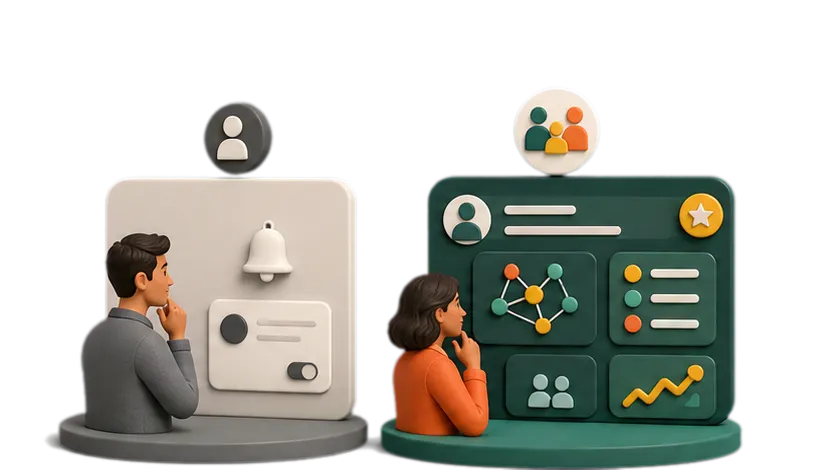
Dex is a filing cabinet with follow-up reminders. Weaverly is an active engine that finds the opportunities hidden inside your network.

Dex is a solid personal CRM. It organizes your contacts, reminds you to follow up, and helps you stay consistent with your outreach. For many people, that's a meaningful step up.

What Dex Does Well

Weaverly is a different kind of tool. Not a better personal CRM, an alternative to one. The first platform built for Network Relationship Management, built to go beyond contact storage and into active opportunity matching.

Dex is the closest thing to NRM among the personal CRMs available today. It helps you organize contacts, track your last interaction, and set reminders to follow up.

If you need a lightweight follow-up system and contact record, Dex delivers. It's a well-built tool for the job it was designed for.

Where Weaverly Goes Further

Weaverly tells you who to follow up with, why now, and what the opportunity is.

  • Offers and Needs profiles, Weaverly maps what you and your contacts can provide and are looking for, enabling genuine opportunity matching. Dex doesn't do this.
  • Woven contacts (contacts who've joined Weaverly and keep their own profile current), when your contacts join Weaverly, their profiles stay current without you maintaining them. Dex has no equivalent.
  • Opportunity matching, Weaverly actively finds worthwhile matches in your network, including introductions between two of your contacts. Dex doesn't surface opportunities.
  • Contacts maintain their own live profiles, Yes on Weaverly. No on Dex.
  • Lateral introductions, Weaverly finds opportunities between two people in your network who should meet, introductions you can make that build your reputation as a connector. Dex doesn't look for those.
  • Category difference, Dex is a personal CRM. Weaverly is an NRM platform. The goal isn't to store contacts better. It's to turn them into action.